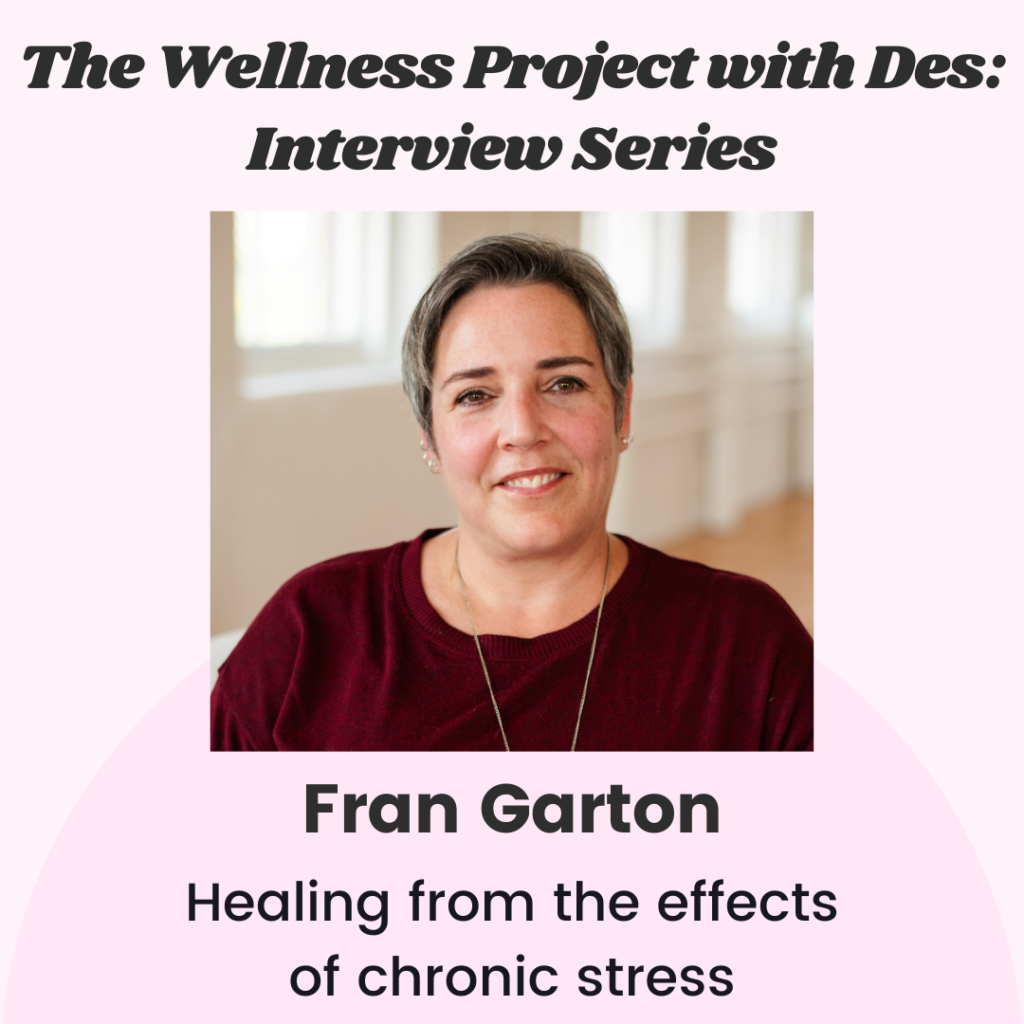
Fran Garton had a 16-year teaching career but the high stress level put her in bed for 4-months. She experienced stress-induced vision loss which made her readjust how she defined “living”. She was determined to make serious changes to her lifestyle. All of the challenges she has faced made Fran realize that self-love and body acceptance are the keys to thriving.
Hi Fran,
Thank you so much for doing this interview. I appreciate you taking the time to speak with me.
What symptoms were you experiencing from high level stress?
Nausea, blurry vision, headaches/migraines, body aches, moodiness, irritability, exhaustion.
How did stress impact your mental health?
The stress caused me to question everything and everyone. I didn’t believe that people enjoyed my company or felt I was competent or even worthy of spending time with. I fell into feelings of sadness and depression. I would cry a lot and felt hopeless.
How did you redefine what “living” meant to you?
I really had to decide what I wanted my life to look like moving forward. I had to redesign how my work and home life looked and set boundaries for things that did not meet this definition. I know that I need to have time for myself, movement, meditation, and breaks throughout my day. Focusing on my work is no longer the focus of my life. Living, enjoying, being happy, feeling rested – these are things that define living for me today.
What lifestyle changes did you implement?
More rest, more boundaries, less stress about things I can’t control, more space in my day, less worry about others. I really had to shift what I spent my time thinking about and doing every day. Being present and knowing that stress comes and goes is important and truly trusting that everything will work out as it’s meant to when I’m ready to receive things.
How did you effectively implement healthy boundaries and what kind of boundaries did you set?
To implement healthy boundaries, you need to know where you are running into challenges or falling short of your goals. Once you know this, then you can decide what types of boundaries you want to set. Deciding what goals I want to achieve helps me set boundaries to help me achieve these goals. Ultimately it rests with the individual to choose to set the boundaries and it’s hard because we worry how it will affect other people. They will adjust. Although everyone is different, there are a few areas that most people could set boundaries:
1. Commitment management – I only schedule 1 activity over the weekend, so that I have time to do meal prep, get ready for the week and spend time with my spouse. Also because I have Fibromyalgia, tiredness is a concern, so 1 free day allows me recovery time if I need it and to pursue my hobbies at leisure.
2. Saying “no” – If you’re a people-pleaser, saying “no” is hard and you feel guilty about it, but saying “no” to certain things allows you to say a big “YES” to things you really want to do. Trying to be and do everything for everyone will result in you feeling burned out and resentful. Say “no” unless you really want to say “yes”.
3. Sleep – I have a regular sleep and wake schedule and this doesn’t change even on the weekends. If I’m out, then I make sure I am home in time for my regular bedtime and I get up at the same time, so my body doesn’t need to keep trying to adjust or catch up on sleep. I also have a sleep routine that doesn’t change even if I’m travelling.
4. Work time – Most evenings are spent with my spouse, friends or family. I don’t generally do work in the evenings. Because of this, I need to make sure that my work hours are focused and productive, so I can shut down my “office hours” and enjoy the rest of my time.
5. Fun – I make sure that I do 1 fun thing every day. Sometimes that’s dancing to my favorite songs, reading, going for a walk, or painting. I always ensure that fun is part of my day.
How do you effectively manage stress?
Meditation, movement, good food choices, journaling, setting boundaries, and sleep are all priorities for me today. I also share how I’m feeling with my spouse a lot more than I did previously. I help others manage their stress through workshops and my coaching program, so that’s always a great reminder of the strategies that I can use whenever needed.
Why do you think self-love and body acceptance are the keys to thriving?
If you can love and accept yourself today, then you don’t spend your time chasing “some day”. Some people believe that once they lose 10lbs or get the perfect job or finally go back to school then they will be worthy of love and acceptance. But that way of thinking is holding you back from truly enjoying life right now and thriving. We can always be better and seek improvement but not because we aren’t good enough, but because we want our lives to be even greater than they are now.
What are some of your favorite coping skills?
Breathing, meditation, movement, refocusing myself, making lists, timelines, and doing small things that make me feel like I’m productive.
What tips can you give those that have difficulty managing stress?
- Breathe – this is key to managing stress and keeping your nervous system calm.
- Identify your stressors – if you know what’s causing stress in your life, you can then work to either minimize or eliminate the stressor.
- Ask for help – if the stress is caused by having too much to do, then ask for help. Teach your family members how to do things, so you can give them responsibility and independence and reduce your stress.
- Meditation – having a clear, calm mind allows me to focus on what may be causing me stress and to solve a problem or situation without feeling stressed.
- Stay organized – having a schedule, following a routine and making sure there’s a plan to get things done helps keep my stress low. It also allows me to be productive and feel accomplished.
- Take lots of breaks – I find that when I am feeling stressed or overwhelmed taking breaks helps me remain stress free. Breaks allow me to work for short periods of time, regroup and rest and then get back to the task at hand.
- Pay attention to automatic thought patterns – We all have a thought pattern that takes over when we feel stressed. For me, it’s Catastrophizing. I think of the worst case scenario for a given situation and rarely, if ever, does the worst case actually happen. Other thought patterns could be All or Nothing thinking. I must do it completely or not bother at all. Overgeneralizing – using words like “always” or “never”. Tunnel vision – focusing on one thing rather than looking at the whole picture. “Shoulding Yourself” – focusing on what should or shouldn’t happen. And Fortune Telling – trying to predict the future without evidence.
- Label your emotion – We often use stress as a blanket emotion for many situations. Ask yourself if you really feel stressed or if it is another emotion. Anger? Sadness? Frustration? Overwhelm? Confusion? Once you identify the real emotion, then it’s important that you feel it and experience it. Strategies for coping with stress are different than ones to cope with sadness.