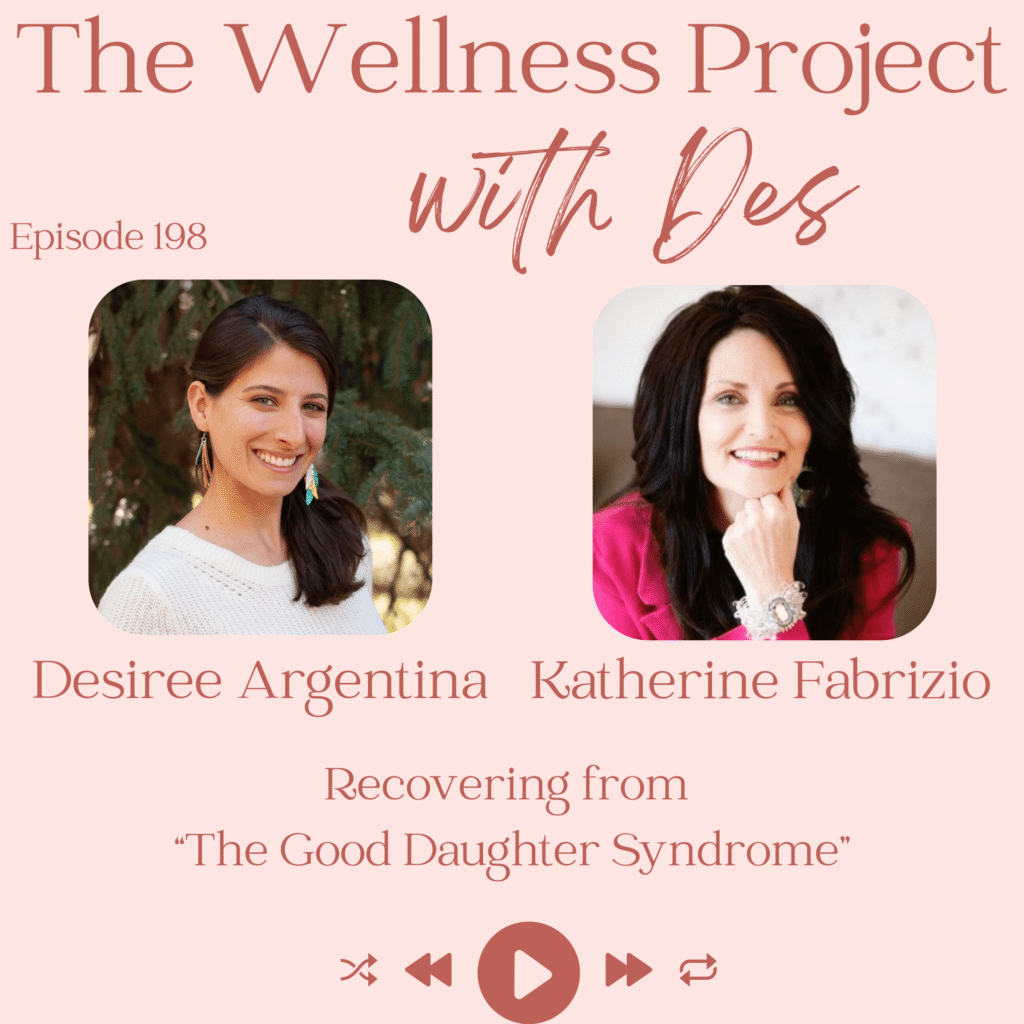
Hello and welcome to my podcast, The Wellness Project with Des. On today’s podcast episode, I speak with Katherine Fabrizio about “The Good Daughter Syndrome.”
I’m Desiree, a Mental Health Therapist and Holistic Wellness Coach, passionate about helping you to improve your mental health and live a healthy and fulfilled life. One way I do this is by interviewing experts in the field of mental health and wellness as well as those that share their first-hand accounts with their mental health journeys. In this episode, we will hear from Katherine about “The Good Daughter Syndrome”: what it is and how you can recover from it.
Katherine Fabrizio is a psychotherapist and the author of the Amazon bestseller, The Good Daughter Syndrome: Help for Empathic Daughters of Narcissistic, Borderline, or Difficult Mothers Trapped in the Role of the Good Daughter.
Katherine once shared a private practice with her mother and believed she was living the life she wanted until she found herself paralyzed by depression. Through her own therapy, she uncovered the truth…that she was in an emotionally oppressive relationship with her mother. This revelation sparked her deep exploration into what she now calls “The Good Daughter Syndrome”, a pattern she not only recognized in herself but also in many of her clients.
In our conversation, Katherine defines the “Good Daughter Syndrome” as well as identifies key traits, characteristics, and behavioral patterns of a daughter who may be struggling with her relationship with her mother. She also discusses how this may manifest in other areas of life, such as friendships, romantic relationships, and work. Katherine highlights that the foundation of The Good Daughter Syndrome is never feeling good enough for your mother, that it doesn’t matter what you do, it is impossible to please her.
Though struggling with an unhealthy relationship with your mother may feel like a trap, know there is a way forward. Listen to the podcast episode to learn how you can take practical steps to begin reclaiming your autonomy, break cycles of guilt and control, and live more authentically.