
Schizoaffective disorder is an often misdiagnosed and midunderstood psychiatric illness. In today’s interview, I speak with Donella Dornwell McLean about her diagnosis, challenges she has faced, and her journey to recovery.
Schizoaffective disorder is a chronic and treatable psychiatric illness. It is characterized by a combination of 1) psychotic symptoms, such as those seen in schizophrenia and 2) mood symptoms, such as those seen in depression or bipolar disorder. It is a psychiatric disorder that can affect a person’s thinking, emotions, and behaviors and can impact all aspects of daily living, including work, school, social relationships, and self-care.
-https://www.mirecc.va.gov/visn22/mirecc_schizoaffective_education.pdf
Donella opens up about living with schizoaffective disorder
Can you tell us about your journey to diagnosis? When did you first realize something was different, and how long did it take to receive the schizoaffective disorder diagnosis?
I was first diagnosed with mild depression in 2000 when I was suffering from symptoms of obsession and depression. Later that year I was diagnosed as Bi-Polar with psychotic features. I had that diagnosis for 13 years and I truly thought it was correct. However, I went manic in 2012 and 2013 and I was hospitalized three times in three months. I found out then that my symptoms were more consistent with schizoaffective disorder.
What was your reaction to finally being diagnosed wirth schizoaffective disorder?
I was happy for my correct diagnosis because it makes the most sense for my symptoms. Naturally, I wasn’t happy for the label, but happy the doctors finally got it right.
What symptoms of schizoaffective disorder were you experiencing?
Schizoaffective disorder is a thought disorder and a mood disorder combined in one. I was having hallucinations, mania, delusions of grandeur, and paranoia.
How does schizoaffective disorder manifest in your life?
Schizoaffective disorder presents itself when I don’t sleep and I start having mania and paranoia. It doesn’t always progress further because I take medications, but it can lead to full blown mania or full blown depression.
Can you explain how the mania presents itself?
Mania is increased energy that is unhinged and full of feelings of agitation and elation intermittently. I personally had delusions that were dream-like. These are called delusions of grandeur…it is terrifying and uplifting all at the same time. There’s no limits, no order, and no recourse when you’re manic.
How did schizoaffective disorder impact your relationships, schooling, and work?
This disorder impacts my life with family, friends, schooling, and work tremendously. I’ve lost jobs, I’ve had to drop classes, I’ve had to struggle with getting support from family and friends. This disorder is alienating. It isn’t widely known about, but it has striking repercussions.
Are your friends, family, or work aware of your diagnosis and how it may present?
No one really knows what’s in your head at any given time, so no one can fully expect how the disorder is presented. I can tell people what I thought when I was in it but they can’t be in it with me.
Do you or have you ever received any accommodations from places of employment?
Two employers have allowed me time off for hospitalizations and others have allowed me to use sick time, but I have lost many jobs because of my mental illness. Most people don’t understand me and are alienated by the ideas they have about mental illness. They don’t want to get involved, almost like it’s contagious.
You’re also in recovery for PTSD. How do these two conditions interact or affect each other?
I will forever be affected by the breakdown that ensued in 2000-2001. I have PTSD about that traumatic breakdown. It interacts with my schizoaffective disorder because the PTSD causes me to relive the occurrences over and over and the Schizoaffective symptoms persist when I started reliving everything.
What does “recovery” mean to you? Is it an ongoing process, or have you reached a place of stability?
Recovery is ongoing and though I’m stable, I know that at any given moment, my life can all come crashing down before me. I don’t have certainty that recovery will ever be permanent, but I strive to make a difference in the world around me while I can.
What strategies, treatments, or routines help you maintain your wellbeing and manage your symptoms?
Medication therapy is crucial and so is good sleep hygiene. I do best with a therapist and actually make progress so much better, but I know that good therapists can be hard to find.
What has been the most challenging aspect of living with schizoaffective disorder?
Getting people to understand is quite difficult. I openly write about my challenges with mental illness because I don’t want it to be hidden like a dark secret. People will never understand if there is no open dialogue.
What kind of support system has been most important to you in your recovery?
The support of my doctors and therapists have been most beneficial. I have a few people in my life that are supportive, but family has often stepped back when I’m having issues.
What are some of the biggest misconceptions people have about schizoaffective disorder?
I had a psychiatrist tell me that if I were schizoaffective, I wouldn’t be able to verbalize my symptoms in the way that I do. He clearly was wrong, but it’s a misconception.
What would you say to family members or loved ones who are trying to support someone with schizoaffective disorder?
Visit them in the hospital. Take them to appointments. Ask them if they are taking their meds. Do not desert them. They need your love and understanding.
What combination of treatments has worked best for you?
Medication, therapy, creative writing, writing poetry, and journaling.
What advice would you give to someone who has just been diagnosed with schizoaffective disorder?
You can get better, but you have to want to. You have to do what it takes to get better. That means taking medication. That means having a therapist. It won’t be easy, but you can do this.
About Donella:
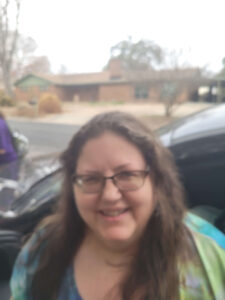
You did a wonderful job with this article, accordingtodes. Thank you for giving me the platform to talk about my mental illness. Hopefully, it will help others.